Buying a Water Filter Pitcher: 7 Checks Before You Choose
This article has been updated 2 times. Last updated on
Lead reduction to 5 parts per billion (ppb) or less, tested against NSF/ANSI Standards 53 and 42, is the EPA benchmark for pitcher filters and the first check when buying a water filter pitcher. Filter life varies widely too, according to Brita’s support pages: Brita rates its Original (Standard) filter at every 40 gallons (about 2 months) and its Elite filter at every 120 gallons (about 6 months).
PFAS removal is less predictable. According to Duke University and NC State researchers, activated-carbon filters removed 73% of PFAS contaminants, on average, but results varied greatly. A good purchase matches three things: the contaminants in your water, the certification printed on the box, and a filter schedule you will keep. The seven checks below run in the order a buyer needs them, from reading your water report to knowing when a countertop pitcher stops being the right tool.
EPA requires community water systems to deliver a Consumer Confidence Report, also known as an annual drinking water quality report, to their customers, and reports must be sent each year by July 1. That report tells you whether you are shopping for better taste, for lead reduction, for PFAS reduction, or for all three.
Before you start: Have your latest water quality report, the pitcher’s box or product page, and the certification body’s listing directory open side by side. The claims you need to compare sit in those three places.
A utility report covers the water system, not the plumbing inside one house. Lead pipes are more likely to be found in older cities and homes built before 1986, and among homes without lead service lines, the most common problem is with brass or chrome-plated brass faucets and plumbing with lead solder.
In an older home, a lead-certified filter makes sense even when the utility report looks clean. A home drinking water test kit closes that gap by measuring what actually comes out of your own tap.
Start with the contaminants your water report or home test flags, then find a filter certified to reduce those specific contaminants rather than one with a general badge. NSF puts it plainly: certification to an NSF/ANSI standard or protocol does not mean that a filter, purifier, or treatment system will reduce all possible contaminants. Filter capacity comes next.
NSF/ANSI 42 filters are certified to reduce aesthetic impurities such as chlorine and taste/odor, while NSF/ANSI 53 filters are certified to reduce a contaminant with a health effect, according to NSF. On a pitcher box, the 42 claim is about taste and the 53 claim is about health, so a filter carrying only 42 is a taste filter.
| Standard | What certification covers | What to check on a pitcher |
|---|---|---|
| NSF/ANSI 42 | Aesthetic impurities such as chlorine and taste/odor | Taste and odor claims |
| NSF/ANSI 53 | A contaminant with a health effect | The specific contaminant listed, such as lead |
| NSF/ANSI 401 | One or more of 15 emerging contaminants | Pharmaceuticals or chemicals not yet regulated |
| NSF/ANSI 58 | Reverse osmosis systems | A membrane system, not a pitcher claim |
Source: NSF consumer resources, 2026
Read the certified contaminant list, not the logo; two pitchers can both say 53 and cover different contaminants.
Certification bodies require their mark and a statement indicating testing against NSF/ANSI Standard 53, along with a claim of lead reduction, according to the EPA’s consumer tool for pitcher and point-of-use filters. The tool covers filters evaluated for drinking water lead (Pb) reduction to 5 parts per billion (ppb) or less.
Lead needs a certified claim: EPA and the Centers for Disease Control and Prevention (CDC) agree that there is no known safe level of lead in a child’s blood. If your home has lead pipes or older brass fixtures, treat a pitcher without an NSF/ANSI 53 lead claim as a taste filter only.
Activated-carbon filters removed 73% of PFAS contaminants, on average, but results varied greatly, according to a Duke University and North Carolina State University study of home filters. In some cases, the chemicals were completely removed; in other cases, they were not reduced at all.
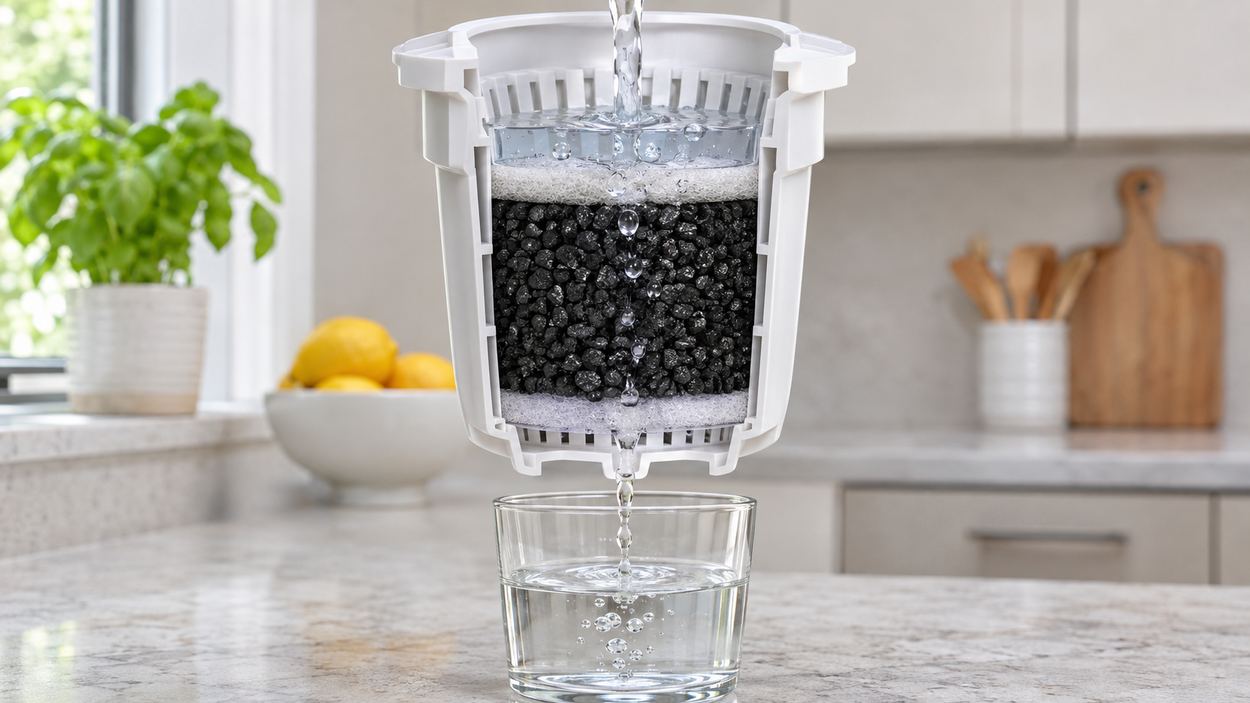
Duke’s Heather Stapleton said, “The effectiveness of activated-carbon filters used in many pitcher, countertop, refrigerator and faucet-mounted styles was inconsistent and unpredictable.”
That field data sits against strict federal limits. The final enforceable levels are 4.0 parts per trillion (ppt) for PFOA and PFOS, and 10 ppt each for PFHxS, PFNA, and HFPO-DA (commonly known as GenX Chemicals).
The rules are still moving: On May 18, 2026, EPA announced two proposed rules related to PFAS in drinking water for public comment. For a pitcher, the practical test is a PFOA and PFOS reduction claim listed on the performance data sheet; without one, treat PFAS removal as unproven.
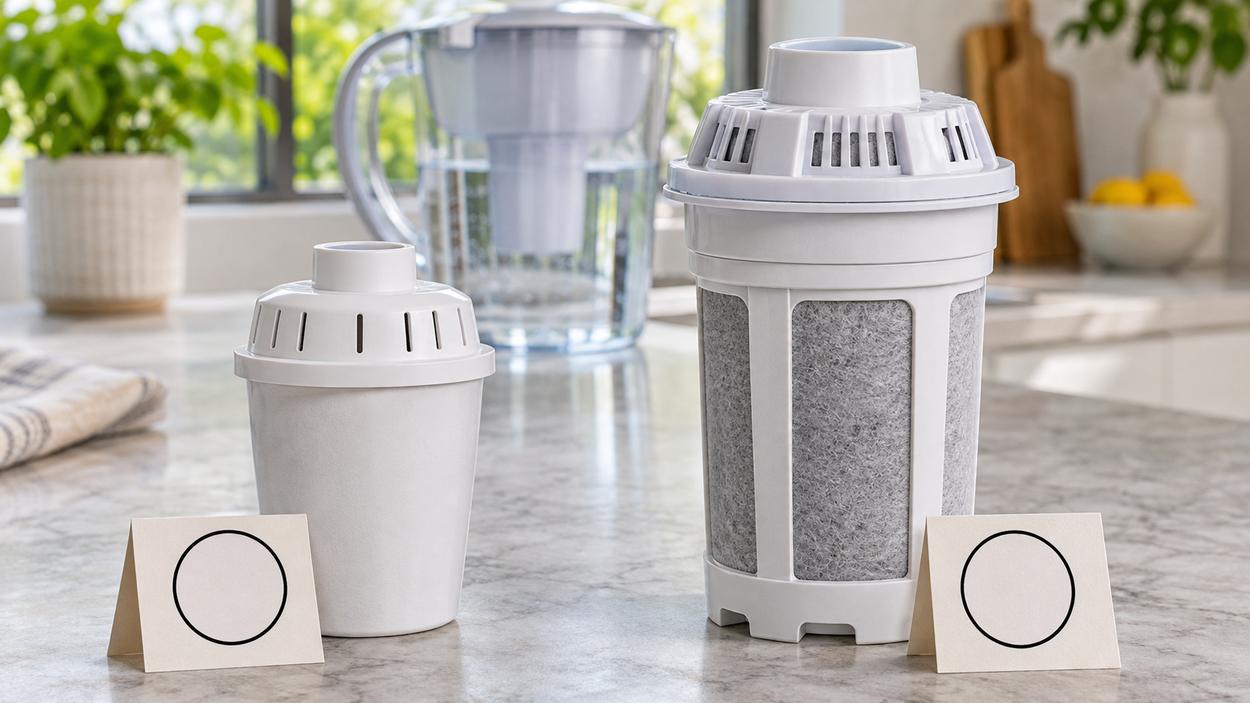
Brita rates its Original (Standard) filter for every 40 gallons (about 2 months) and its Elite filter for every 120 gallons (about 6 months), according to its support pages. Culligan ZeroWater’s 5-stage filter is certified for 15-gallon capacity, and rated capacity across these filters spans an 8-fold range, from 15 to 120 gallons.
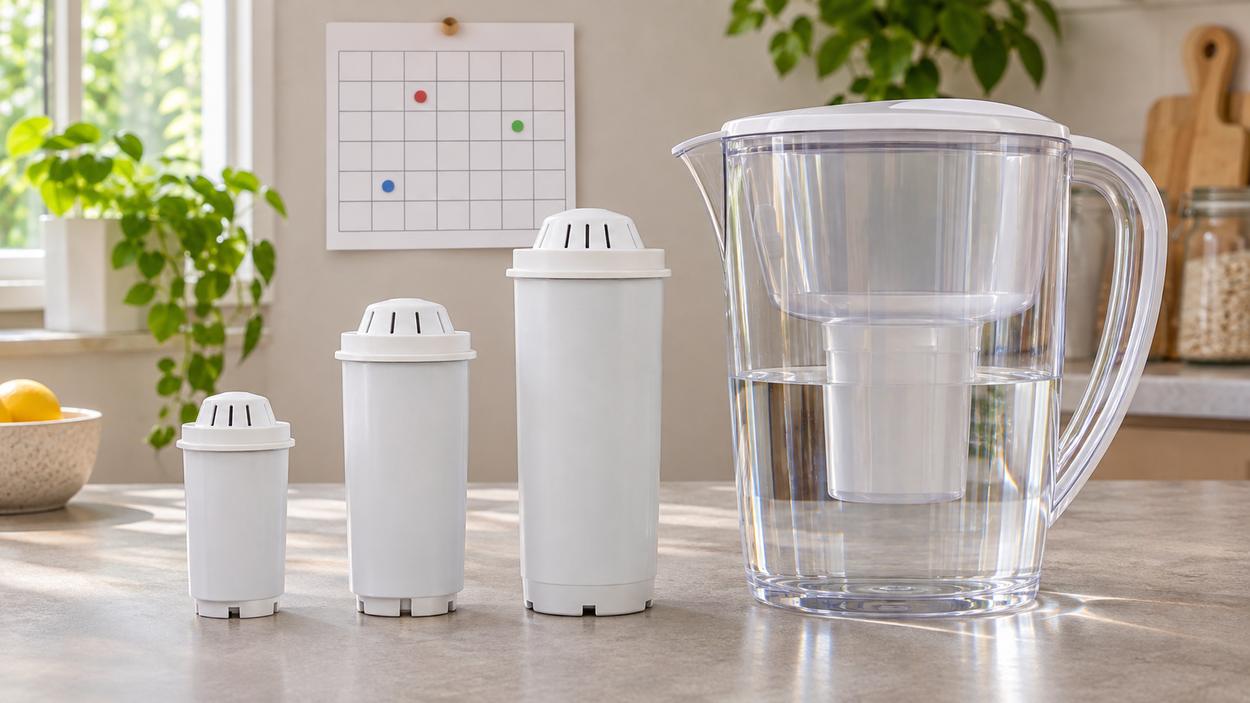
You replace the filter on a schedule and the pitcher only when it cracks or stops seating a cartridge properly. Brita’s schedule runs every 40 gallons (about 2 months) for Original (Standard) and Stream filters and every 120 gallons (about 6 months) for Elite filters. Set the reminder the day you install a cartridge.
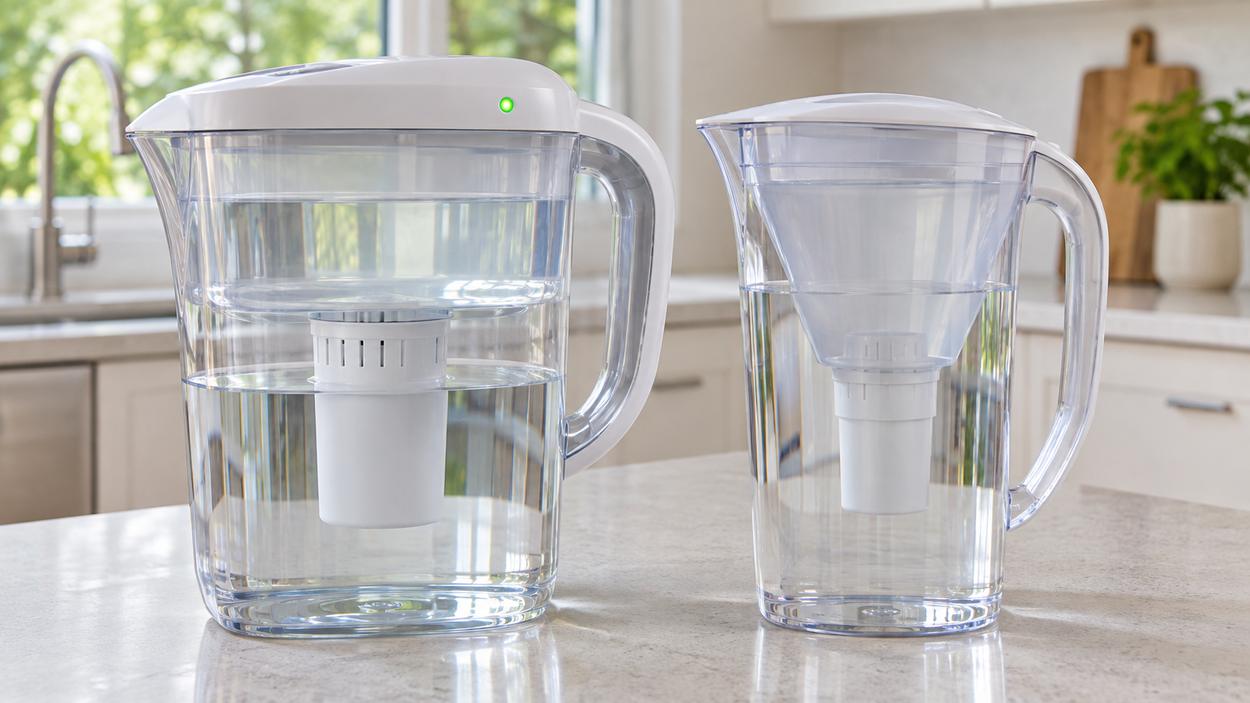
The Brita Elite filter requires water to flow through the sides of the filter, instead of the bottom, and the Brita Stream filter is designed to filter water as you pour, according to Brita. Pour-through designs suit households that refill often, while reservoir designs suit people who fill the pitcher and let it drain.
Reverse osmosis filters and two-stage filters reduced PFAS levels, including GenX, by 94% or more in water in the Duke and North Carolina State University study. NC State’s Detlef Knappe said, “Home filters are really only a stopgap,” and added that “The real goal should be control of PFAS contaminants at their source.”
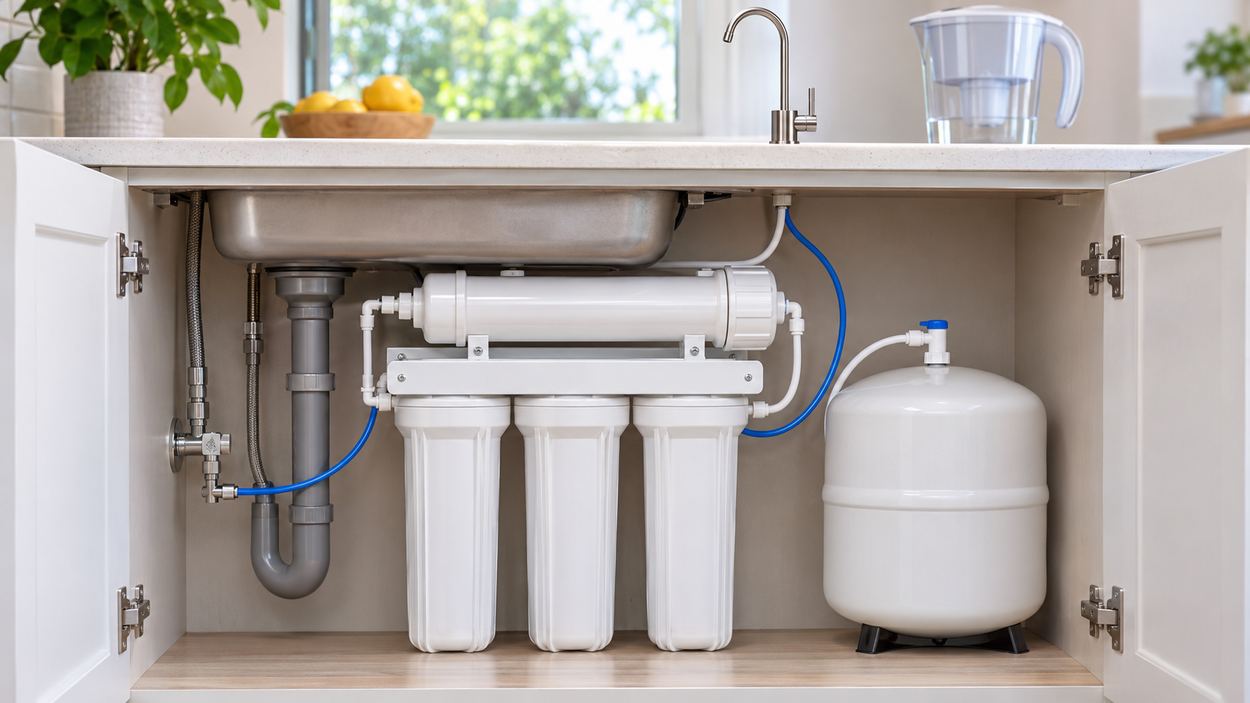
A membrane system is a plumbing project rather than a countertop purchase, and how reverse osmosis purification works shapes what it costs to run. If your report comes back clean and the taste is fine, whether a water filter pitcher is necessary becomes the real question.
NSF warns that certification to an NSF/ANSI standard or protocol does not mean that a filter, purifier, or treatment system will reduce all possible contaminants, and most buying mistakes start there. The EPA tool’s lead benchmark is reduction to 5 parts per billion (ppb) or less, which a bare badge cannot tell you.
No single brand, Brita included, wins for every home. The better pitcher is the one certified under NSF/ANSI 53 for the contaminants in your water, with a filter life you will actually keep up with.
All Brita filters are certified to reduce chlorine taste and odor, while the Culligan ZeroWater 5-stage filter is certified against NSF/ANSI Standard 53 for reduction of lead, PFOA, and PFOS for 15-gallon capacity.
The trade-off is capacity against contaminant coverage, and the certified contaminant list decides it. Our PUR, Brita, and ZeroWater pitcher comparison lines the major brands up side by side.
Lead reduction to 5 parts per billion (ppb) or less against NSF/ANSI Standards 53 and 42 is the clearest line to look for on a pitcher box, and filter life is the cost that follows you home: Brita rates its Original (Standard) filter at every 40 gallons and its Elite filter at every 120 gallons. Read the water report first, match the certification to what it shows, then pick the capacity you will actually replace on time.
Older homes with lead plumbing gain the most from a certified pitcher. Households worried about PFAS should remember that activated-carbon filters removed 73% of PFAS contaminants, on average, but results varied greatly, and weigh an under-sink system as federal limits phase in. Once you know which certification you need, the water filter pitcher reviews narrow the field to models that carry it.

Leave a Reply