How to Conserve Water at Home: 7 Steps to Cut Water Use
This article has been updated 2 times. Last updated on
The average American family uses more than 300 gallons of water per day at home, and roughly 70% of this use occurs indoors, according to the EPA’s WaterSense program, so learning how to conserve water at home starts with the fixtures and habits inside the house. EPA also estimates that we can all use at least 20% less water by installing water-efficient fixtures and appliances.
The order you work in matters more than the length of the list. Replacing a clock-based controller with a WaterSense-labeled irrigation controller can save an average home up to 15,000 gallons of water annually, while turning off the tap while brushing your teeth can save 8 gallons of water per day. The seven steps below run from free leak checks and fixture swaps to appliance habits and lawn watering, each with the EPA or ENERGY STAR figure behind it.
Fix leaks first, then replace old toilets and sprinkler controllers, then add WaterSense showerheads, aerators, and better habits. EPA data shows why: replacing old, inefficient toilets with WaterSense-labeled models can save the average family nearly 13,000 gallons of water every year.
By comparison, replacing old, inefficient faucets and aerators with WaterSense-labeled models can save the average family 700 gallons of water per year.
EPA puts the starting point at 82 gallons of water per person per day at home, based on USGS data. The table below ranks each step by the water it saves or wastes in a year.
| Water-saving step | Water saved or wasted per year | Source |
|---|---|---|
| Replace a clock-based irrigation controller | Up to 15,000 gallons saved | EPA WaterSense |
| Replace old toilets with WaterSense models | Nearly 13,000 gallons saved | EPA WaterSense |
| Fix household leaks | More than 9,300 gallons wasted by leaks | EPA WaterSense |
| Switch from hand washing to an ENERGY STAR dishwasher | 8,400 gallons saved | ENERGY STAR |
| Turn off the tap while brushing and shaving | Nearly 5,700 gallons saved | EPA WaterSense |
| Install WaterSense showerheads | 2,700 gallons saved | EPA WaterSense |
| Install WaterSense faucets and aerators | 700 gallons saved | EPA WaterSense |
| Run the dishwasher only when full | Nearly 320 gallons saved | EPA WaterSense |
Source: EPA WaterSense 2026, ENERGY STAR 2026
Before you start: Find your water meter, pull up a winter water bill, and keep a bottle of food coloring and an adjustable wrench nearby. Those cover the leak checks and the fixture swaps in the first four steps.
According to USGS, the largest use of household water is to flush the toilet, and after that, to take showers and baths. EPA puts showering at nearly 17% of residential indoor water use, or nearly 40 gallons per day for the average family. Outdoors can top both: the average U.S. household uses more water outdoors than for showering and washing clothes combined.
The average household’s leaks can account for more than 9,300 gallons of water wasted every year, according to EPA’s Fix a Leak Week guidance, and fixing easily corrected household water leaks can save homeowners about 10% on their water bills. Common types of leaks found in the home are worn toilet flappers, dripping faucets, and other leaking valves.
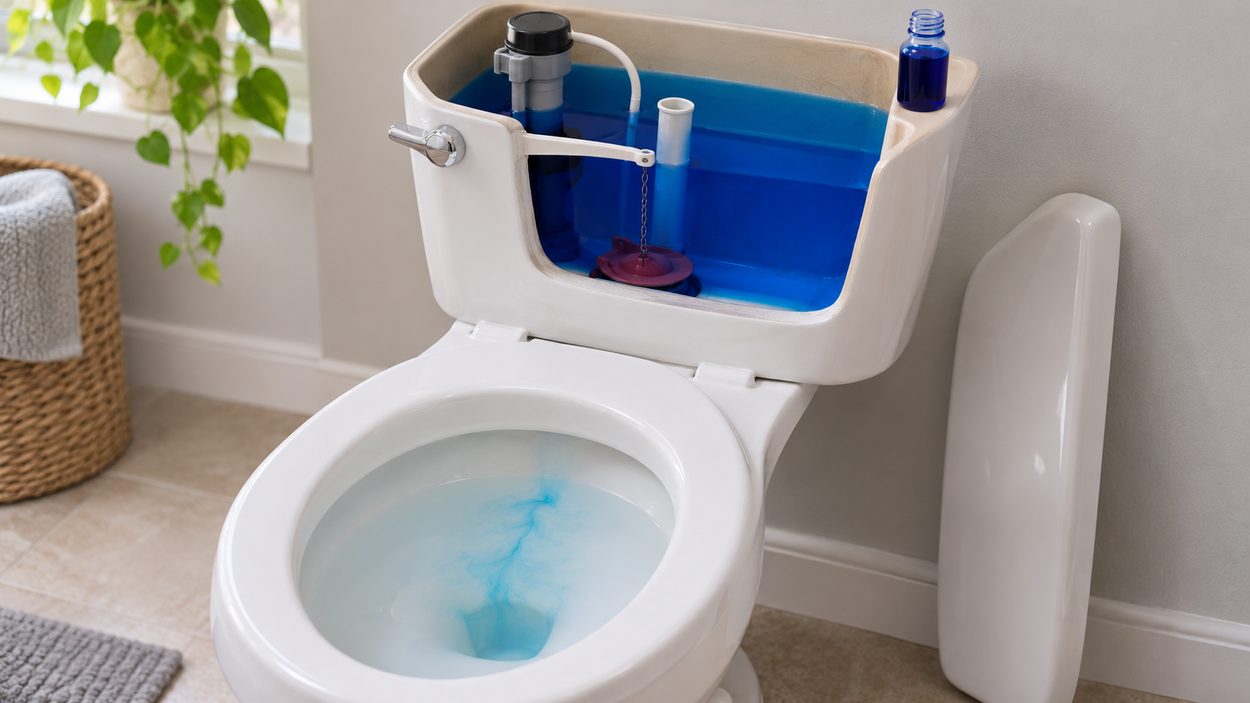
Run these checks in order. None of them cost anything.
| Leak check | EPA threshold or interval |
|---|---|
| Winter bill, family of four | Above 12,000 gallons per month |
| Water meter test | Any change over a two-hour period with no water use |
| Toilet dye test | Color in the bowl after 10 minutes |
| Toilet flapper | Replace at least every five years |
| Average household leak waste | More than 9,300 gallons a year |
Source: EPA Fix a Leak Week 2026
Once the leaks are closed, the shower is the next daily draw worth trimming.
EPA says standard showerheads use 2.5 gallons of water per minute, while water-saving showerheads that earn the WaterSense label must demonstrate that they use no more than 2.0 gpm. The average family could save 2,700 gallons per year by installing WaterSense-labeled showerheads, and the swap needs only a wrench and thread tape.
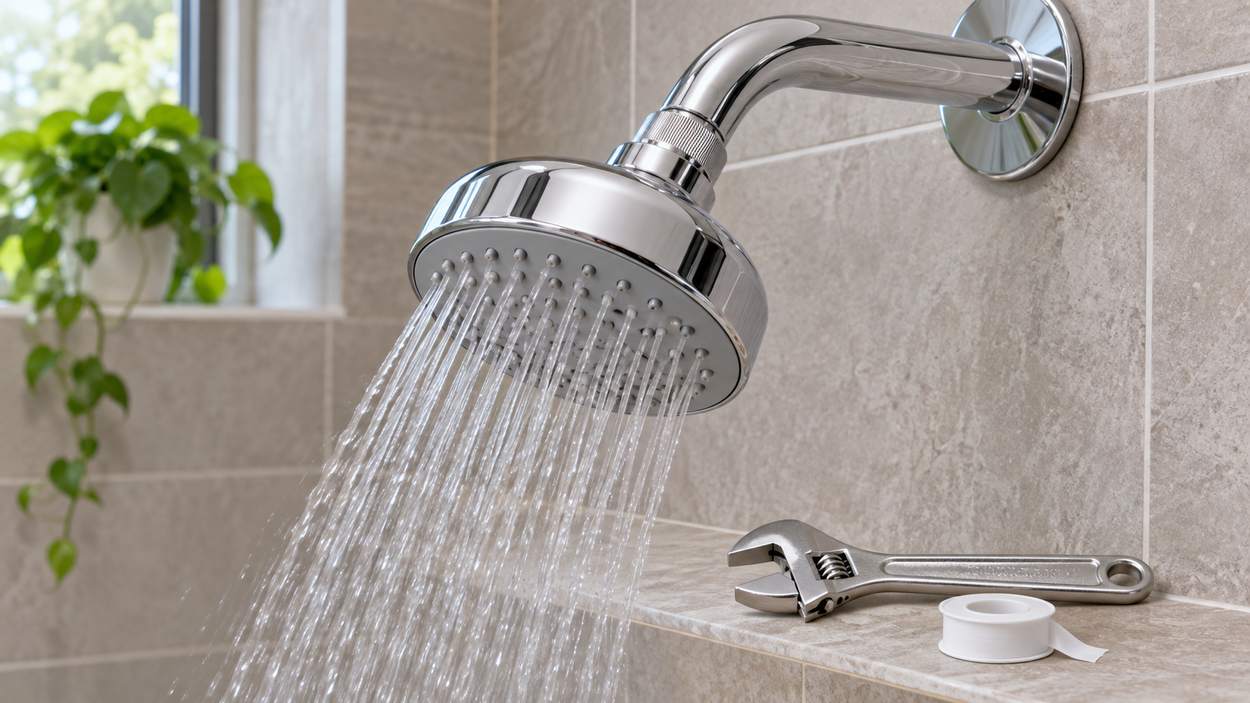
Since these water savings will reduce demands on water heaters, they will also save energy, and the average family could save more than 330 kilowatt-hours of electricity annually. Less hot water through the head means less work for the water heater, whether you run a storage tank or one of the tankless water heaters that heat water as it flows.
At the standard 2.5 gpm flow EPA cites, a 20-minute shower uses about 50 gallons and a 30-minute shower uses about 75 gallons. With a WaterSense head at its 2.0 gpm ceiling, the same showers drop to about 40 gallons and about 60 gallons.
EPA WaterSense says bathroom sink faucets and accessories that use a maximum of 1.5 gallons per minute can reduce a sink’s water flow by 30% or more from the standard flow of 2.2 gallons per minute. Replacing old, inefficient faucets and aerators with WaterSense-labeled models can save the average family 700 gallons of water per year.
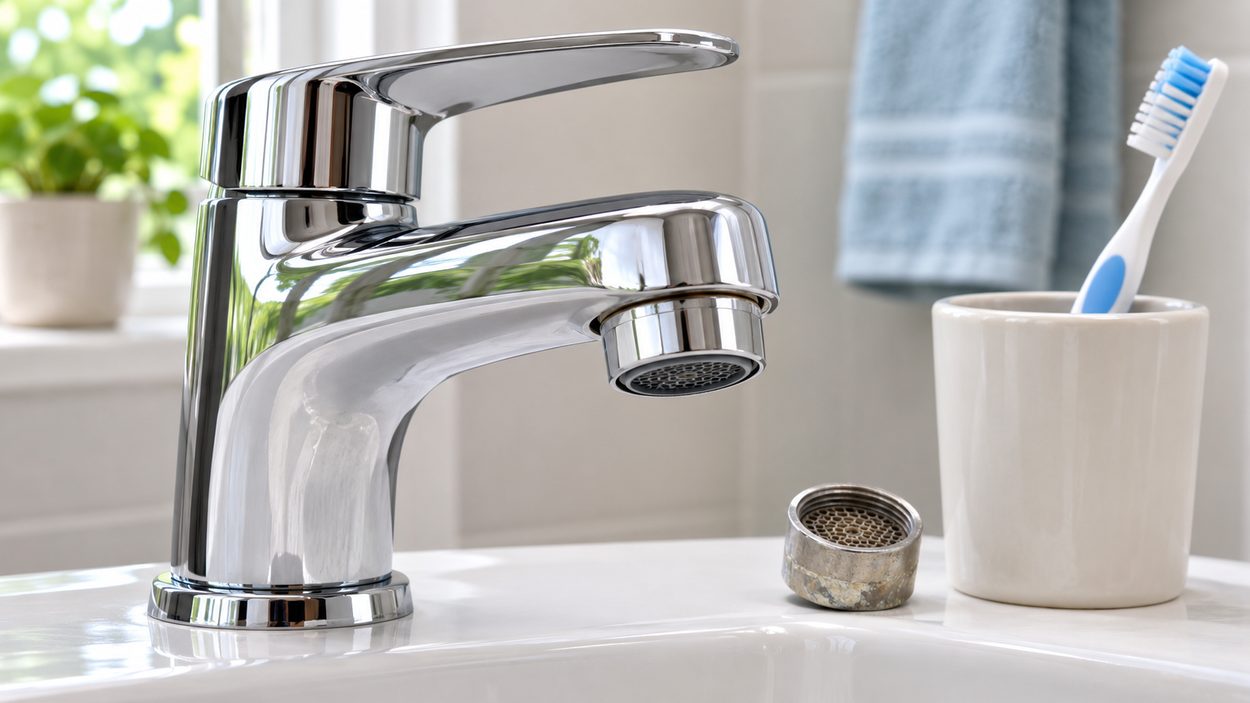
Achieving these savings can be as easy as twisting on a WaterSense-labeled aerator, which can cost as little as a few dollars. Habits add to the hardware savings:
Showerheads follow the same pattern from Step 2: 2.5 gpm for a standard head against 2.0 gpm for a WaterSense model.
Pro tip: Unscrew the aerator and read the marking on it. USGS notes that you might see something like “1.0 gpm”, which means that the faucet head will allow water to flow at a maximum of 1.0 gallons per minute.
If the fixture itself is failing, the guide to kitchen faucet types helps you choose a replacement body before you pick an aerator.
Design improvements have allowed toilets to use 1.28 gallons per flush or less, which is 20% less water than the current federal standard of 1.6 gallons per flush, according to EPA WaterSense. By replacing old, inefficient toilets with WaterSense-labeled models, the average family can reduce water used for toilets by 20 to 60%.
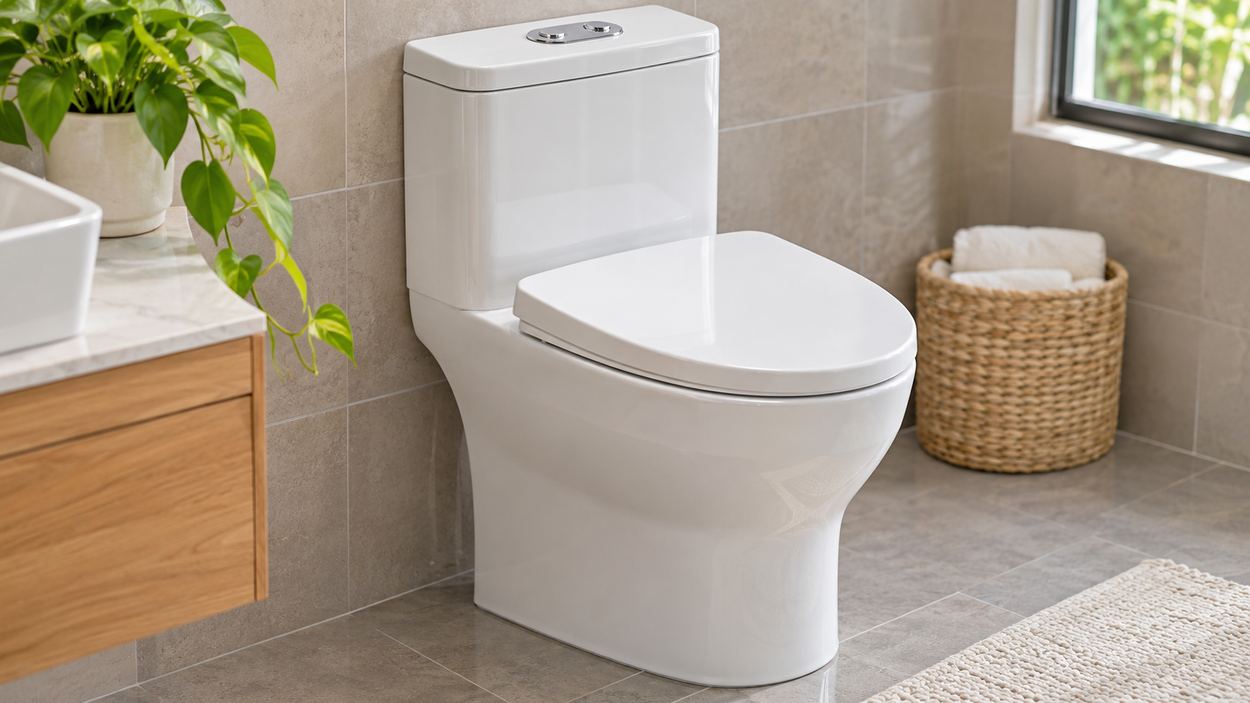
They could also save more than $170 per year in water costs, and $3,400 over the lifetime of the toilets. Because flushing is the biggest indoor use, this is the indoor upgrade with the largest payoff once the leaks are fixed.
ENERGY STAR says a new ENERGY STAR certified dishwasher uses less than half as much energy as washing dishes by hand and saves 8,400 gallons of water each year. For laundry, full-sized washers that have earned the ENERGY STAR use 14 gallons of water per load, compared to the 20 gallons used by a standard machine.
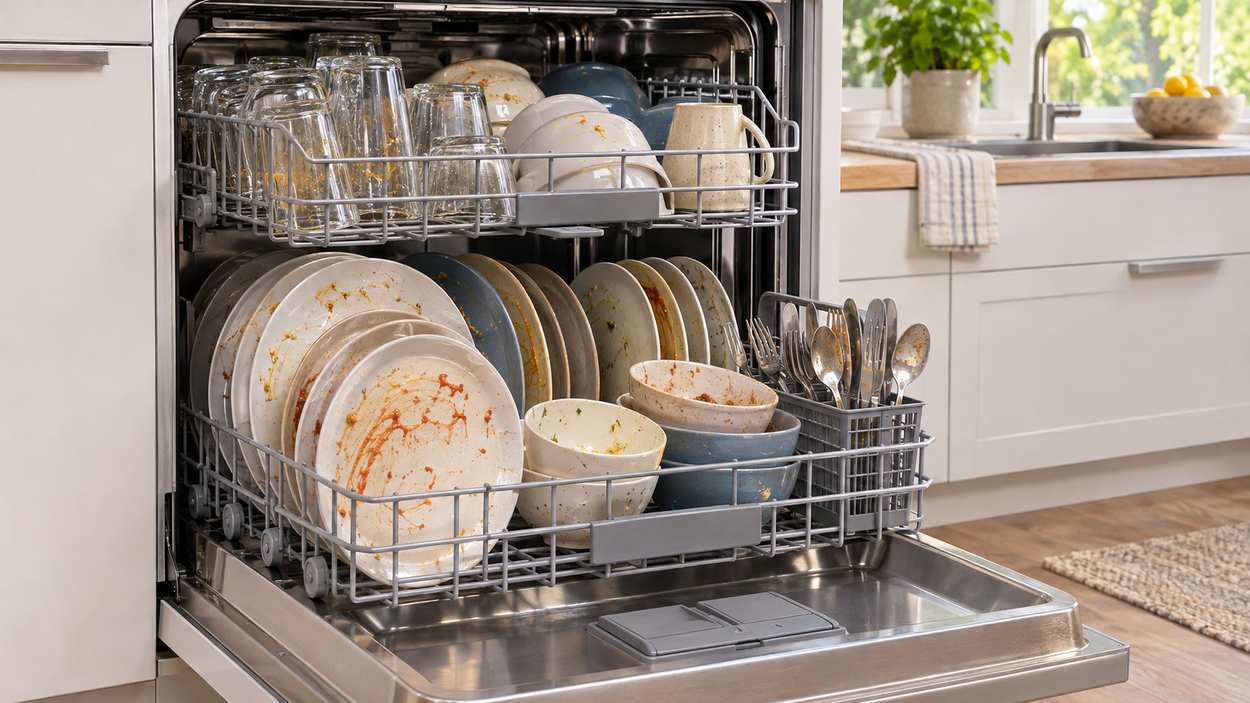
The average American family washes about 300 loads of laundry each year, so the per-load difference works out to about 1,800 gallons a year. The habits that cost nothing:
EPA says a typical point-of-use RO system will generate five gallons or more of reject water for every gallon of treated water produced, while point-of-use RO systems that earn the WaterSense label must demonstrate that they send just 2.3 gallons of water or less down the drain for every gallon of treated water they produce. If you run a reverse osmosis system under the sink, look for the WaterSense label when the unit is due for replacement, and compare kitchen faucet models by flow rate if the tap goes too.
EPA estimates that of the 29 billion gallons of water used daily by households in the US, nearly 9 billion gallons, or 30%, is devoted to outdoor water use. In the hot summer months, or in dry climates, a household’s outdoor water use can be as high as 70%.
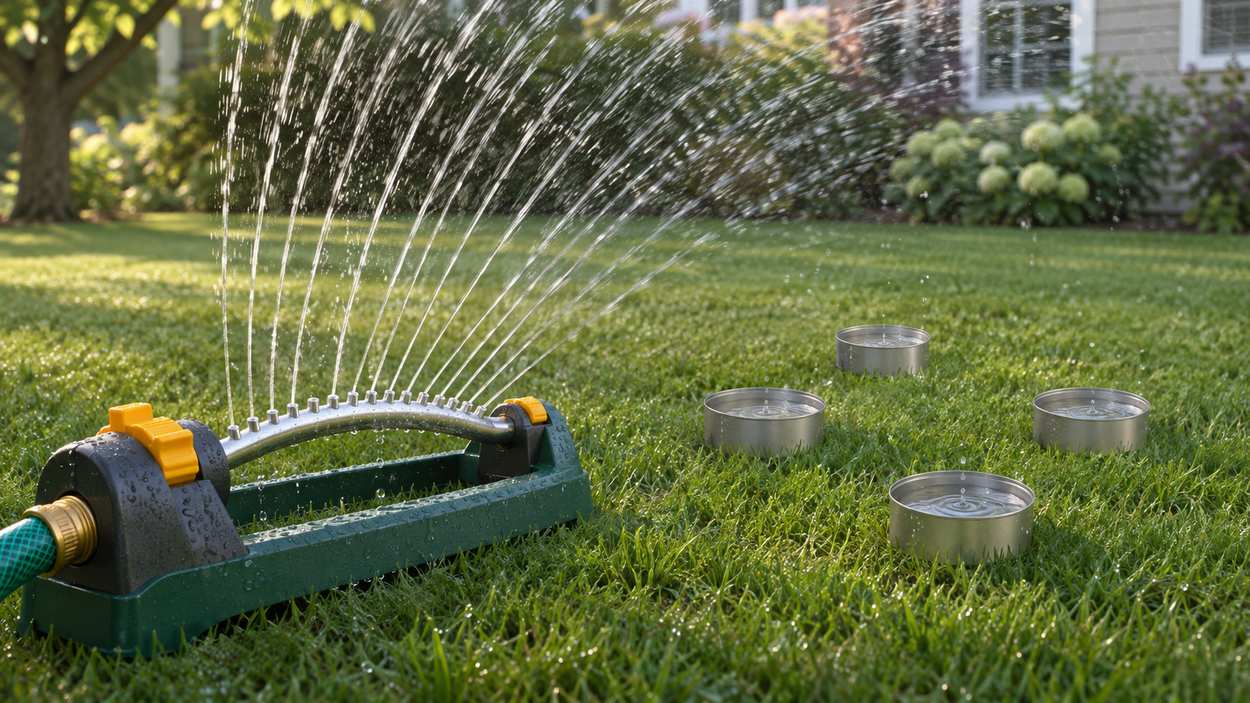
Check rainwater rules first: Rain barrels or cisterns can be used to harvest rain water for irrigation and other outdoor water uses, but some states might have laws that prohibit collection of rainwater. Check with your state’s water resource agency before you install one.
On EPA’s own numbers, inefficient outdoor watering is the strongest candidate. As much as 50% of the water we use outdoors is lost due to wind, evaporation, and runoff caused by inefficient irrigation methods and systems, and a household with an automatic landscape irrigation system that isn’t properly maintained and operated can waste up to 25,000 gallons of water annually.
Homes with clock timer-controlled irrigation systems use about 50% more water outdoors than homes without irrigation systems, according to EPA’s Sprinkler Spruce-Up guidance. Your system can waste even more if it’s programmed incorrectly, a sprinkler head is pointed in the wrong direction, or you have a leak.
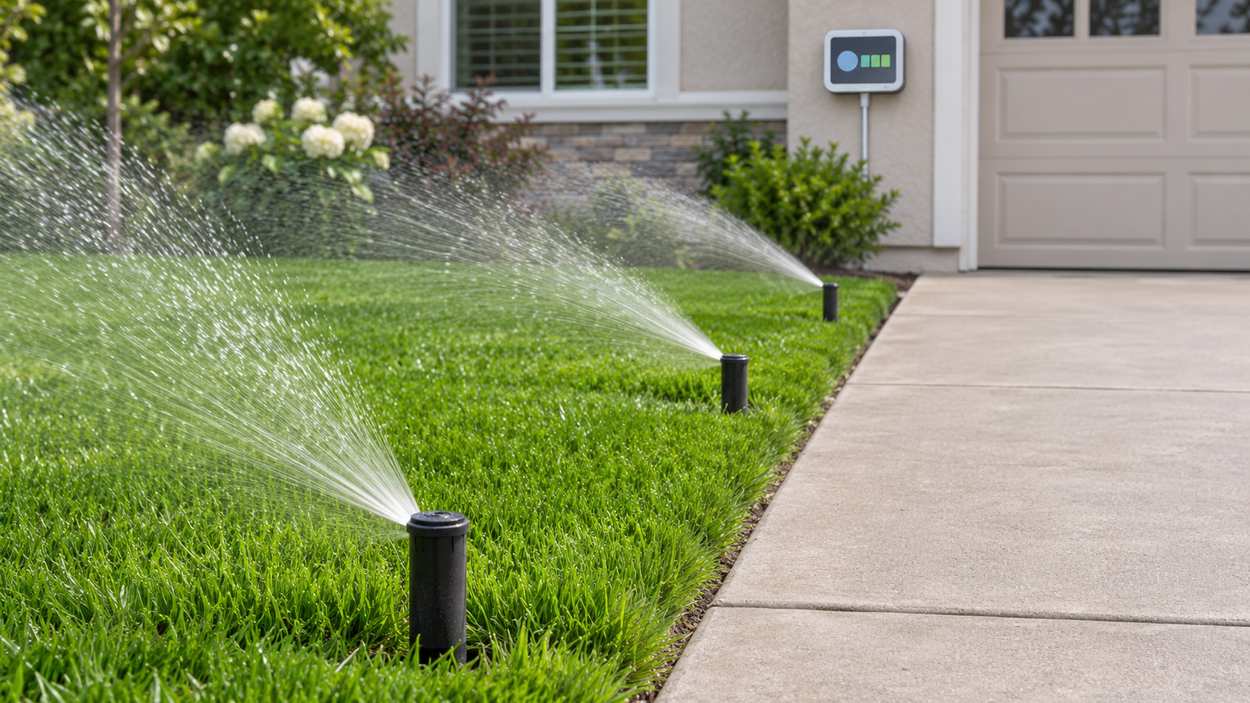
EPA’s routine has four simple steps: inspect, connect, direct, and select.
A controller swap is the one outdoor purchase on this list; everything else in this step is a walk around the yard.
On average, each person uses about 80-100 gallons of water per day for indoor home uses, according to USGS. For a two-person home, that works out to roughly 160 to 200 gallons a day indoors, before any lawn watering.
EPA’s per-person figure is a little lower: each American uses an average of 82 gallons of water a day at home, based on USGS data. The estimates differ by method and year, so your own meter reading over a normal week is the number to plan around.
The average American family uses more than 300 gallons of water per day at home, and some of the largest cuts come from a short list: nearly 13,000 gallons of water savings every year from WaterSense toilets and more than 9,300 gallons of water wasted every year to household leaks. Start with the free leak checks, then the toilet and showerhead, then the appliances and the lawn.
The average family spends more than $1,000 per year on water costs, but can save more than $380 annually from retrofitting with WaterSense-labeled fixtures and ENERGY STAR-certified appliances, and the EPA estimates that we can all use at least 20% less water by installing water-efficient fixtures and appliances. In a dry climate, where the yard takes the biggest share, move the outdoor steps to the front of the list.

Leave a Reply